The short answer
At DvelopNET, landing pages start from €400 + VAT. Template-based websites are €800–2,500 + VAT, custom websites €3,000–10,000 or more + VAT, and online stores start from €3,000 + VAT. You receive a clear proposal with the price for your scope before any work begins, and most projects take around 3–10 weeks. After launch, running costs for a basic website start from €170 per year + VAT.
Contents
- How much does a website cost in Cyprus?
- What changes the price of a website?
- Is a one-page website enough?
- One-off price or pay monthly?
- What does a website cost after launch?
- Is VAT included in website prices?
- How do you compare website quotes?
- Website builder, freelancer or studio?
- How long does a website take?
- What did real projects include?
- Questions
How much does a website cost in Cyprus?
It depends on what the website has to do. These are the four kinds of website businesses usually ask us about, with our prices.
| Type | What it is | What it usually includes | Our price |
|---|---|---|---|
| Landing page | One page with one clear focus: a service, an offer or a campaign | A clear message and a way to get in touch | From €400 + VAT |
| Template-based website | Several pages built on a ready-made design, adapted to your business | Service pages and contact forms | €800–2,500 + VAT |
| Custom website | A website designed and built for your business | Its own design, more pages, and features such as bookings or connections to other systems | €3,000–10,000 or more + VAT |
| Online store | A site that sells products online | Product pages, a cart and payments | From €3,000 + VAT |
These are starting prices: your proposal gives the exact price for your scope. Two of our projects show the difference: Care Property Management is a business website with a page for each service, and Dona Laser Beauty Centre has its own booking system.
What changes the price of a website?
A website is priced like any work made to fit: by what it has to do. These are the things that move the price.
| What changes the price | Smaller scope | Larger scope |
|---|---|---|
| Pages and templates | One focused page | Many pages, each with its own job |
| Content | You already have the text and photos | Text, photography or video still need to be created |
| Features | A contact form | Bookings, an online shop or connections to other systems |
| Languages | One language | Greek and English, and for international buyers, Russian or Hebrew |
| Design | Adapted from a template | Designed for your business |
| Search set-up | Added later, if at all | Planned from the start: pages, titles and descriptions written for the searches your clients make |
The real projects below show how these choices add up.
Is a one-page website enough?
Sometimes. A landing page is the right start for one service, one campaign, an event or a fast launch. It starts to hold a business back when one page has to carry everything.
- Search: people search for one service at a time. A page about one topic gives Google a clear answer; one page about ten services gives a vague one.
- Clarity: a visitor looking for one service should find it in a click or two, not by scrolling past everything else.
- Languages and growth: new services, projects and languages need somewhere to live.
Lia C. Demou Law Firm shows the alternative: its website has a page for each of its eight practice areas, so each area can be found on its own.
One-off price or pay monthly?
Some providers spread a website into monthly payments; others quote one price for the build. Each has trade-offs:
- One-off: a larger payment at the start, and a lower total over time.
- Monthly: a smaller start, but the payments continue, and the total over the years can be higher.
We quote a fixed price for the project, set out in your proposal before work begins, and we do not offer pay-monthly websites. The yearly running cost is separate, so you can see what the build costs and what keeping the website online costs.
Whichever you choose, ask one question first: if you stop paying, who keeps the website and the domain? With DvelopNET, you keep control of your website and its content, and you are free to manage it yourself or work with anyone you choose.
What does a website cost after launch?
A website is not a one-time purchase. Plan for:
- A domain: your address, such as yourbusiness.com.cy, renewed every year.
- Hosting: the server your website runs on, paid monthly or yearly. Good hosting keeps the site fast and available.
- Security: the certificate behind the padlock in the browser, often included with hosting.
- Updates and changes: keeping the site up to date, and changing content when the business changes.
With us, running costs for a basic website start from €170 per year + VAT, and we can host your website for you. Ongoing support is agreed clearly in advance; it is not unlimited free support.
Is VAT included in website prices?
In Cyprus, the standard VAT rate is 19% (European Commission, Your Europe: VAT rates, checked 3 November 2026).
Our prices are always shown + VAT, so a landing page from €400 + VAT comes to €476 with VAT at the standard rate. When you compare quotes, check whether each price includes VAT before comparing totals.
How do you compare website quotes?
Quotes can look far apart because they often describe different work. Check that each one answers these questions.
| Ask | Why it matters |
|---|---|
| How many pages and templates? | More pages mean more design and build time |
| Which languages? | Each language adds content and checks |
| Who supplies the text, photos and video? | Creating content is work in its own right |
| Which features are included? | Bookings, an online shop or integrations change the scope most |
| Is the search set-up included? | Titles, descriptions and page structure decide how the site is found |
| Who owns the hosting and the domain? | It decides who controls the website if you change provider |
| What does support after launch include? | Support is rarely unlimited; know what you get |
| How long will it take? | A date only means something if the scope behind it is clear |
| What does a change cost later? | Every website changes after launch |
Website builder, freelancer or studio?
Each route can be right; the difference is in cost, time, control and support.
| Route | Cost | Your time | Control and support |
|---|---|---|---|
| Website builder | The lowest up-front cost, usually with a monthly subscription | You design, write and maintain it yourself | Limited to what the platform offers; the site depends on that platform |
| Freelancer | Often lower than a studio | You manage the project with one person | Depends on one person’s skills and availability |
| Studio | Usually higher than the other two | A team handles design, build and launch | Design, development and support in one place, with the same people after launch |
Choose by what the website has to do for the business, not only by the first price.
How long does a website take?
Most website projects take around 3–10 weeks. Where a project lands in that range depends on the size of the site, the content and features it needs, and how quickly feedback and approvals come back.
What did real projects include?
Four of our projects show how scope differs:
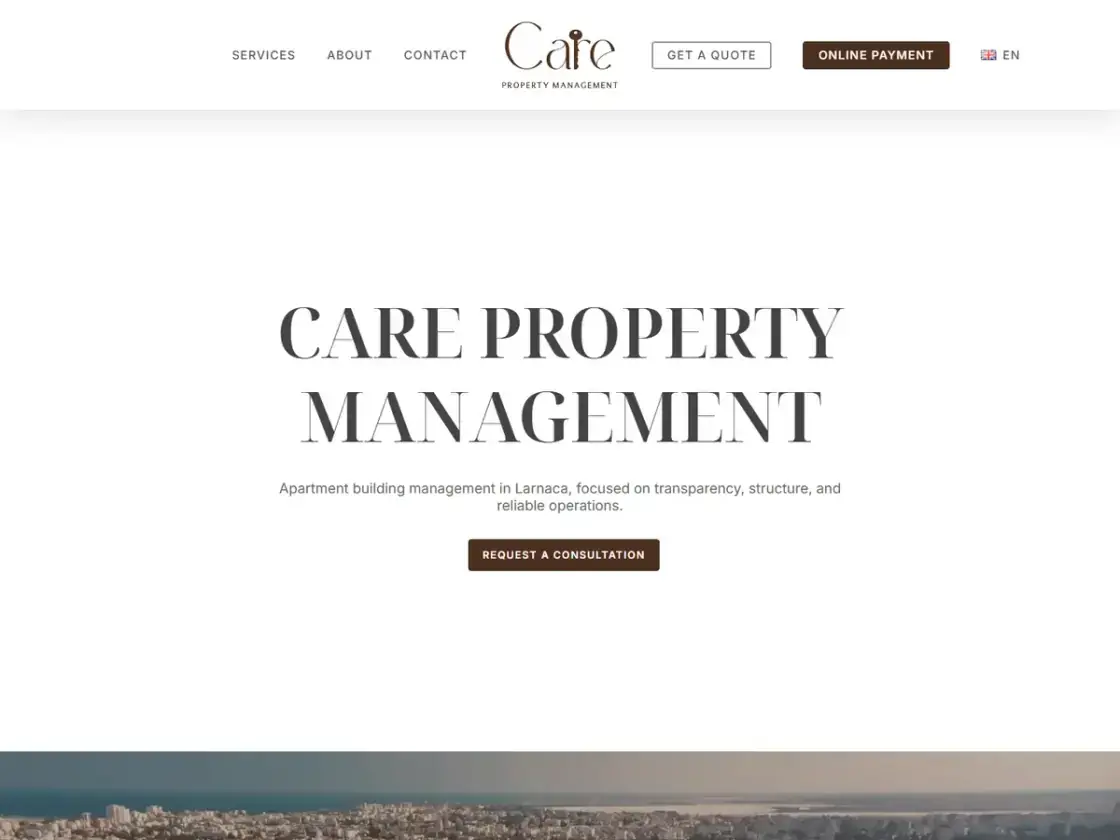
- Care Property Management: a website in English and Greek, a page for each of its 9 services, and forms for quotes and maintenance reports. As of November 2026, it ranks first on Google in Cyprus for “building management Larnaca”.
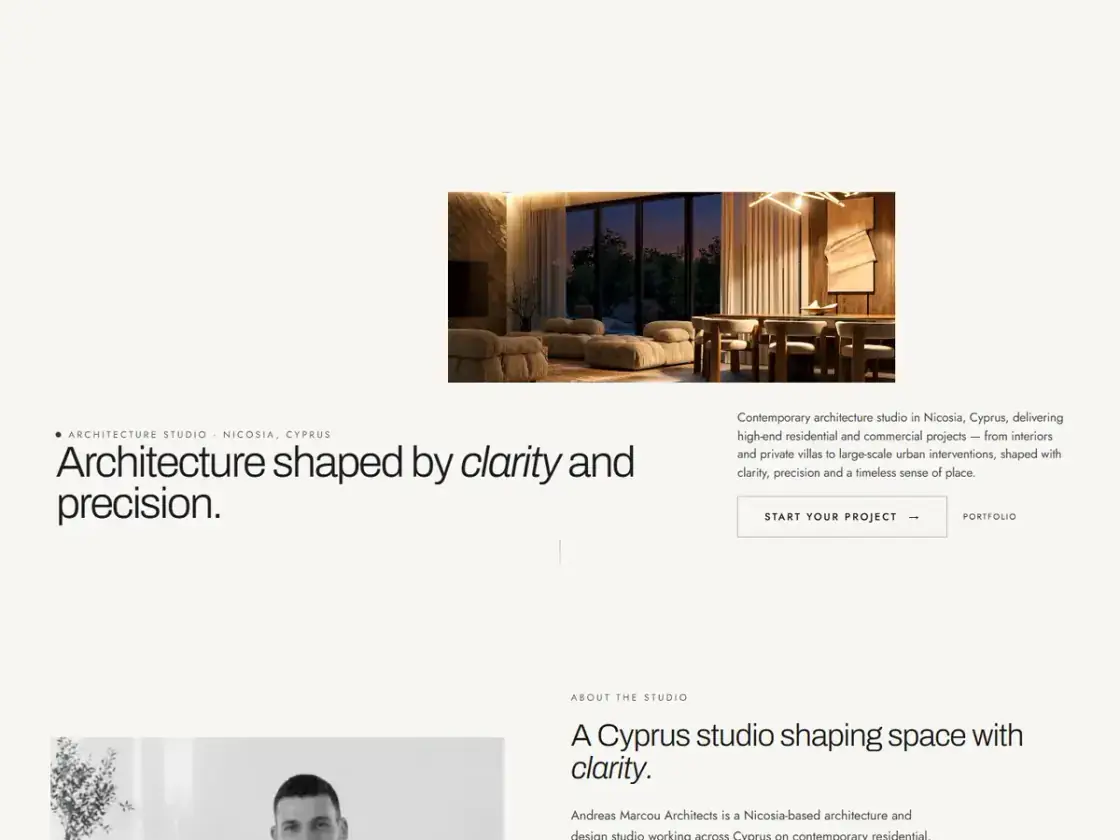
- Andreas Marcou Architects: 11 pages, a portfolio of 26 projects with filters, and a custom plugin so the practice adds new projects itself.
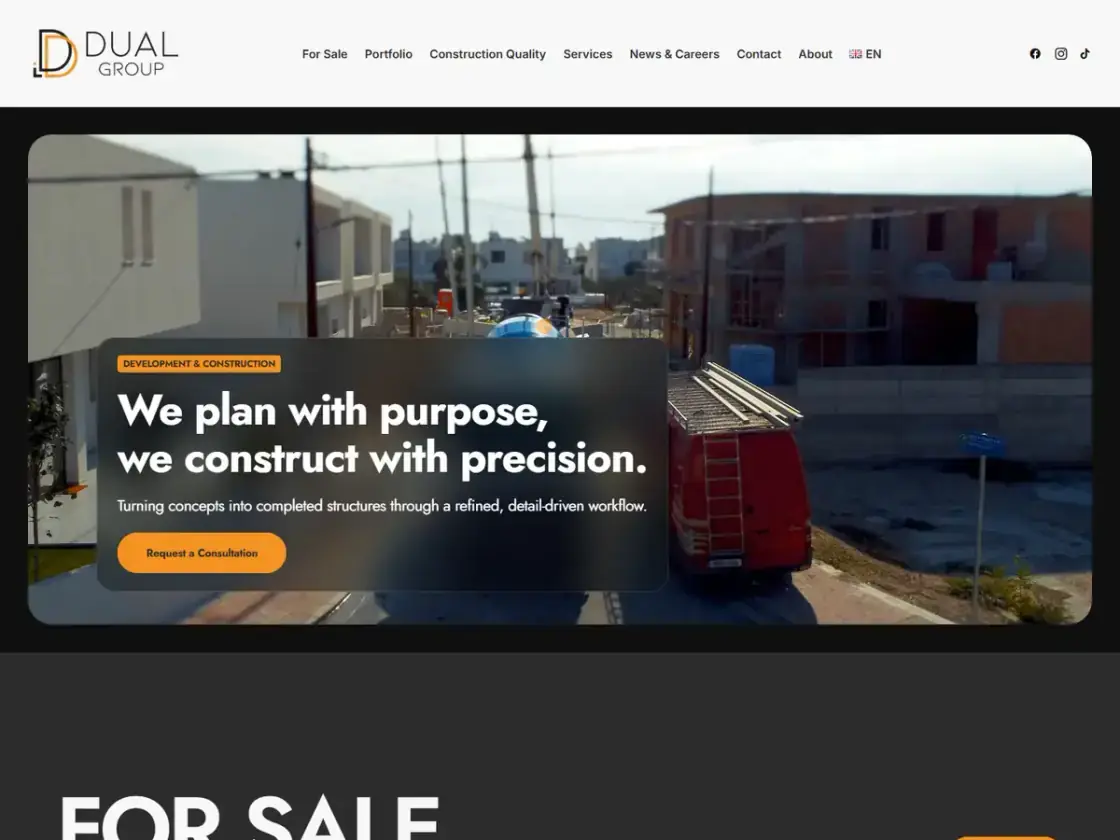
- DUAL Group: English and Greek, 9 project pages with a table of every unit, and a custom plugin to manage the projects.
- Dona Laser Beauty Centre: a website with online booking. Its online bookings grew 220% in 2024 compared with 2023.
How we wrote this: the prices are DvelopNET’s own, checked November 2026. The projects are our own work. The VAT rate is from the European Commission, checked 3 November 2026.