The short answer
Yes, for every service your customers search for by name. A page about one service can answer that search directly, with a title, description and text that match it, while one page that lists everything matches no search well. Each page should say what the service is, who it is for, what it includes and what to do next, in the words your customers use. Do not copy the same page for every town you cover, because Google treats that as spam.
Contents
Why does one page per service help?
Because people search for what they need, not for your company name. Someone who wants a lift serviced in their building, a lawyer for a residence permit or an architect for a house searches for exactly that. Google then looks for the page that answers it best. If all your services share one page, that page has to answer every search at once, and it answers none of them well.
A page about one service can match its search from top to bottom. Google says a good page title is “unique to the page, clear and concise”, and a good meta description is “unique to one particular page” (Google Search Central: SEO Starter Guide). It also warns that identical titles “make it impossible for users to distinguish between two pages” (Google Search Central: Title links). You can only write a title and a description for one service when the service has a page of its own.
It helps the visitor too. Someone who arrives from a search lands on the answer to their question, not on a list they have to read through to find it.
What should a service page include?
- A title and heading that name the service, and the area if you serve one, such as “Building management in Larnaca”.
- The words your customers use. Google advises you to “think about the words that a user might search for” (SEO Starter Guide). If customers say “common expenses”, do not write only “service charge administration”.
- What the service includes and who it is for, in plain sentences.
- Proof: photos, examples, a short video or a project you completed for this service.
- Answers to the questions customers ask before they call, such as how it works, how long it takes and what you need from them.
- One clear next step: a form, a phone number or a booking button on the page itself.
- A web address with words in it, such as yourdomain.com/lifts/. Google says a URL with only random identifiers “is less helpful for users” (SEO Starter Guide).
- Its own meta description. Google’s advice is to “create unique descriptions for each page on your site” (Google Search Central: Snippets).
Then link to each service page from your menu, your home page and related pages, with link text that names the service. Google describes good link text as “descriptive, reasonably concise, and relevant” to the page it links to, and calls “Click here” and “Read more” too generic (Google Search Central: Link best practices).
| What changes | One page lists every service | Each service has its own page |
|---|---|---|
| Page title | General, such as “Our services” | Names the service, such as “Lift maintenance in Larnaca” |
| What a searcher finds | A list to read through | The answer to their search |
| Details and proof | A line or two per service | What is included, examples, questions answered |
| Next step | One general contact form | A form or call button for that service |
Should you also make a page for every town?
Not by copying the same page and changing the town’s name. Google’s spam policies name this as doorway abuse, giving as examples “pages targeted at specific regions or cities that funnel users to one page” and “substantially similar pages that are closer to search results than a clearly defined, browseable hierarchy”. The same policies also list blocks of text naming the cities a page is trying to rank for (Google Search Central: Spam policies).
Say on each service page which areas you cover, in a sentence, and let your Google Business Profile carry your location. A separate page for an area makes sense only when it has something real of its own to say, such as projects you completed there, an office or a team, and customers who search for it.
What does it look like in practice?
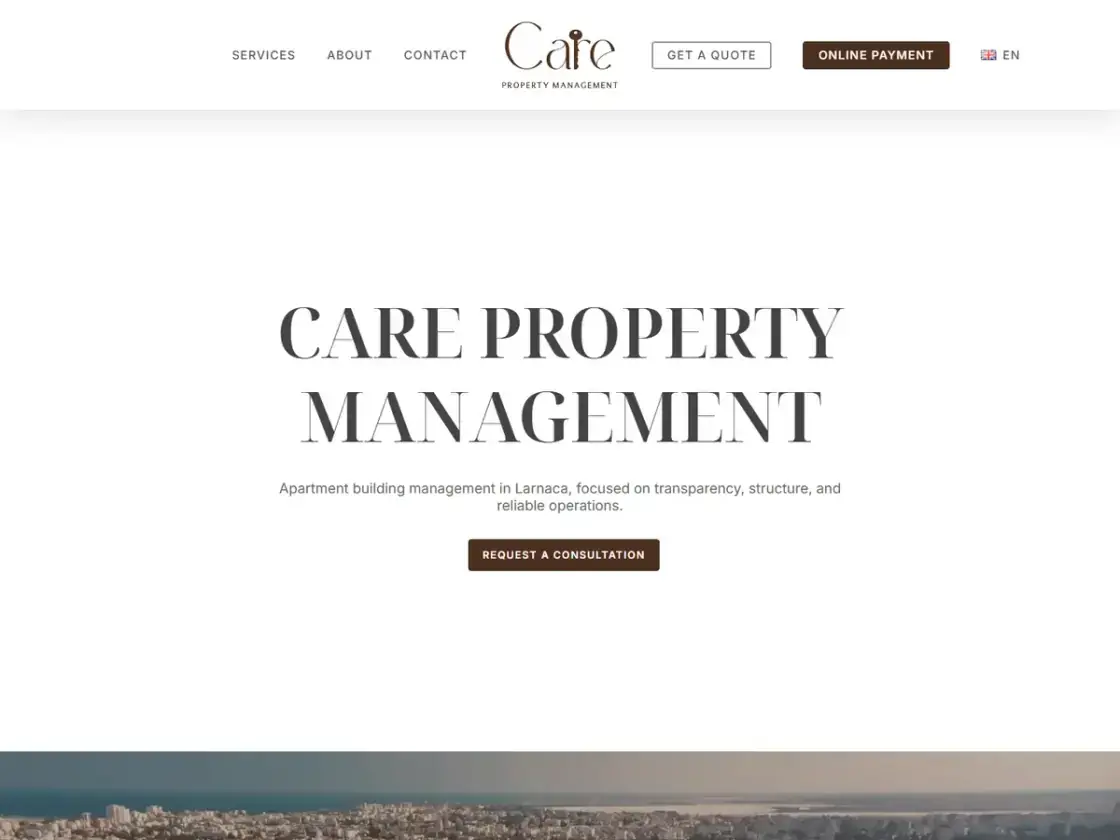
Care Property Management in Larnaca had no online presence. In 2025 we built its website in English and Greek with a page for each of its 9 services, from common expenses to elevator management, and titles and descriptions written for Larnaca searches. As of November 2026, it ranks first on Google in Cyprus for “building management Larnaca”, in English and Greek.
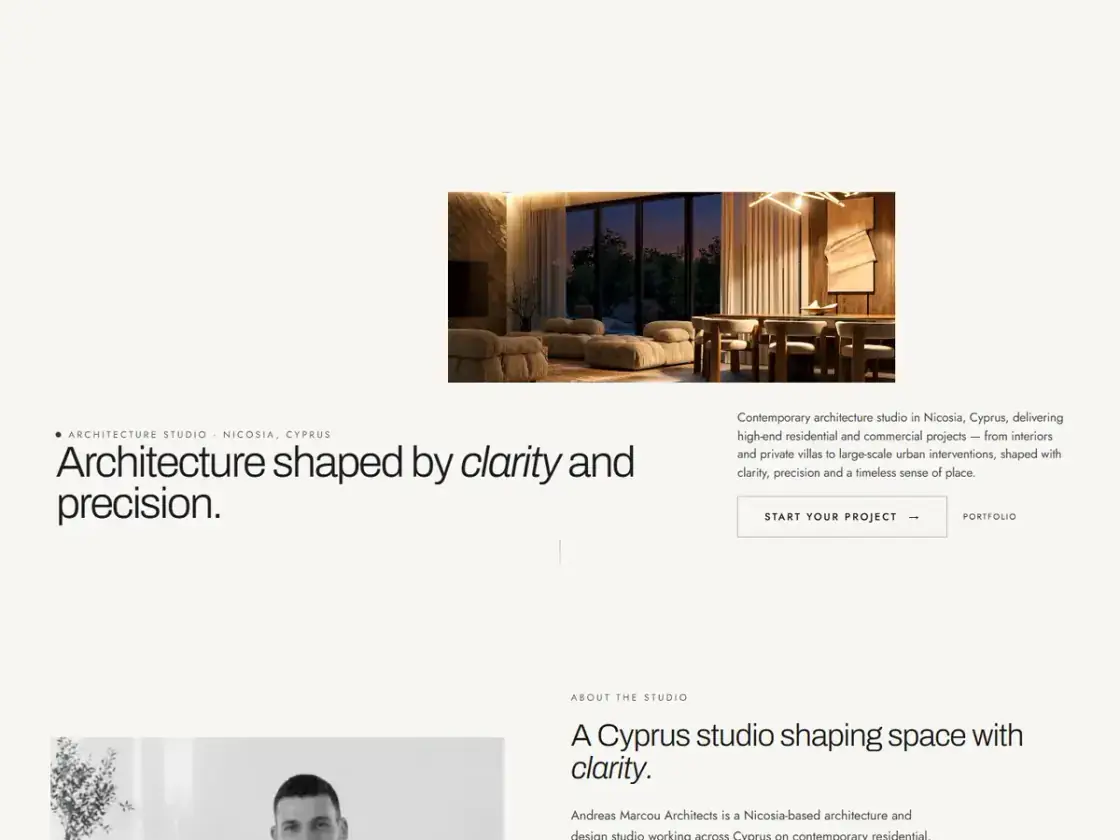
The website we built for Andreas Marcou Architects has 11 pages, including a page for each of its five services, from architecture and interiors to landscape. It brings the practice 1–2 new enquiries a month.
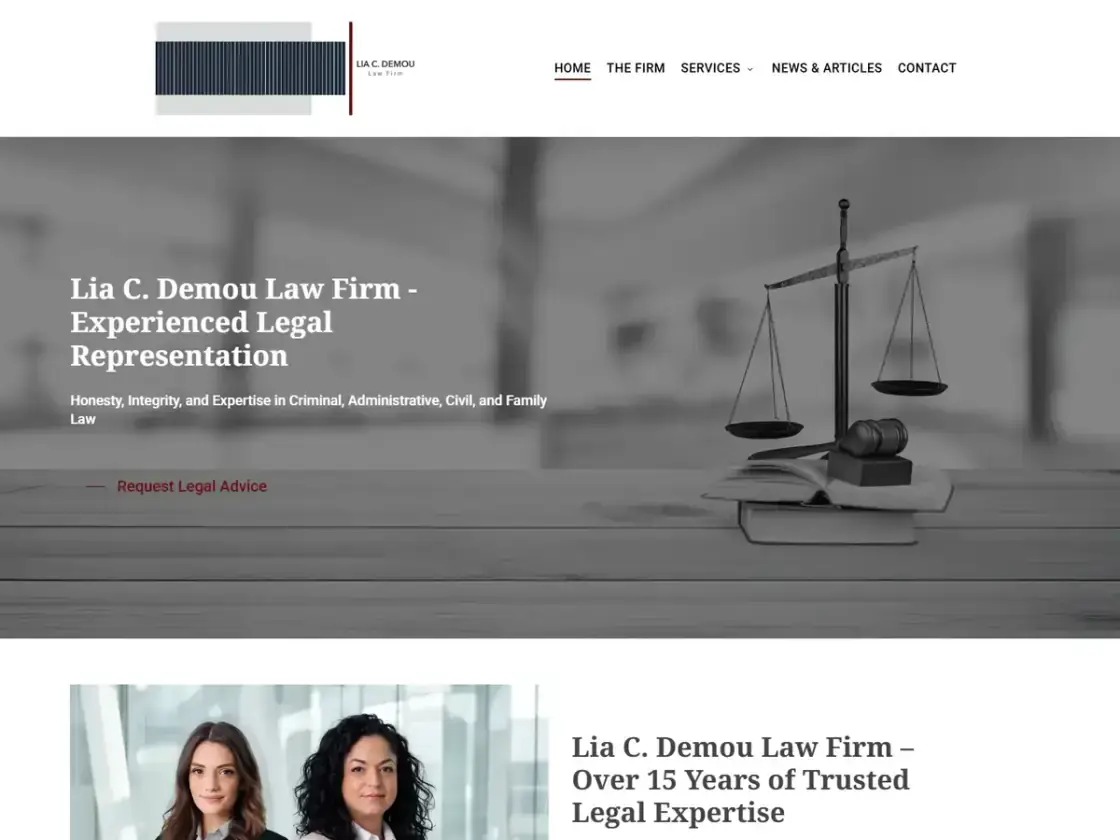
For the Lia C. Demou Law Firm, each of the firm’s eight practice areas, from criminal and family law to immigration and employment law, has its own page. Each one explains the area under Cyprus law and links to related areas.
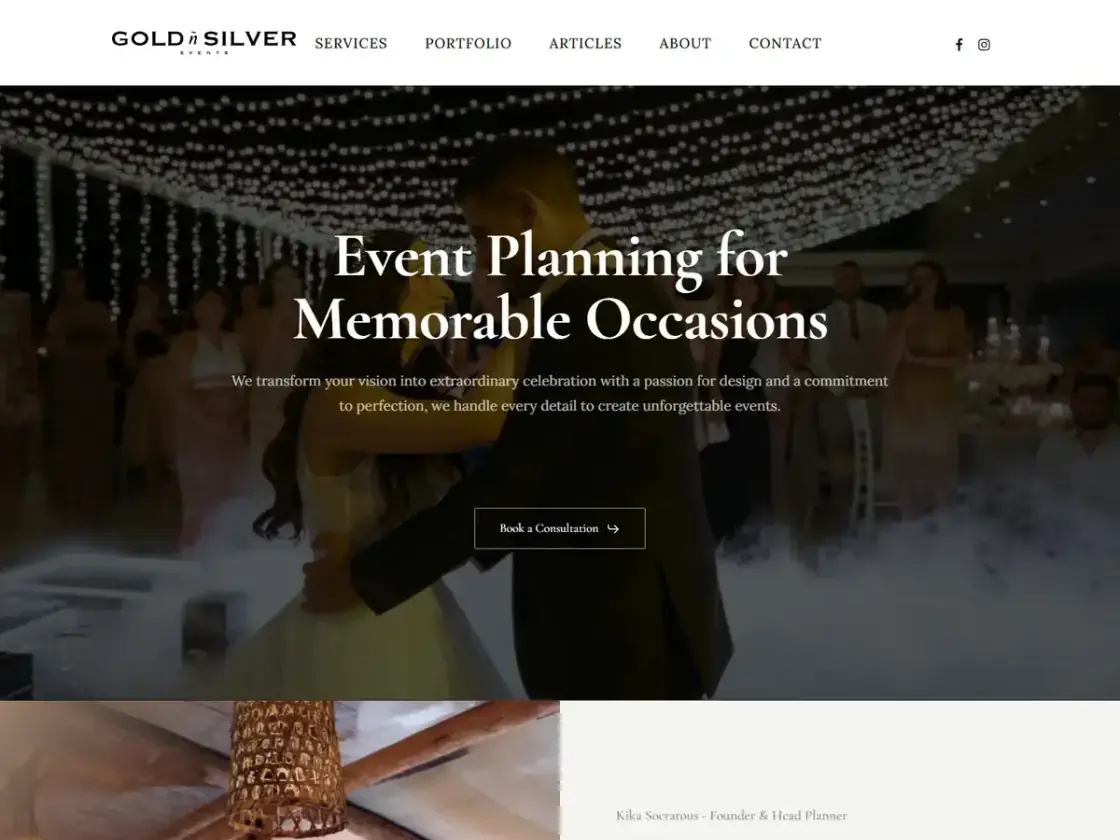
And at Gold & Silver Events, event videos sit inside the service pages, so each service is shown in motion, not only described. The client tells us calls have increased since the website launched, and that callers mention it.
Where do you start?
- Write down your services the way customers name them, for example from the questions they ask on the phone.
- Group what belongs together. Two services that customers see as one need one page.
- Start with the services that bring you the most work, and add the rest one page at a time.
- List the same services on your Google Business Profile. Google lets you add services with descriptions there (Google Business Profile Help: Manage your services).
If your website already has service pages but does not appear on Google at all, start with why a website may not show on Google. How the number of pages affects the price is in our cost guide. We plan and build service pages as part of our Web Design service.
How we wrote this: what Google says about titles, descriptions, web addresses, links and doorway pages is from Google Search Central and Google Business Profile Help, checked 16 November 2026. The Care Property Management position was checked in November 2026. The projects are our own work, and the results are as stated on their project pages.
Key takeaways
- Customers search for a service, not for your company. A page about that one service is what Google can show them.
- Give each service page its own title, description and web address, written in the words customers use.
- Say what the service includes, who it is for and what to do next, and show real work.
- One honest page per service beats a copied page for every town.